
Ever notice a smooth shave can leave your skin red, itchy, or even burning minutes later? Razor burn and shaving rash happen a lot. With the right tools and a few simple changes in technique, you can cut down on it.
Learning how to prevent shaving rash and razor burns can help you get a closer, smoother shave while keeping your skin calm. Small moves — like picking a better razor, prepping your skin before shaving, and treating it after — often make the biggest difference. They may not stop every little nick, but they usually mean less irritation and faster healing.
Here I’ll break down what causes shaving rash and razor burn. I’ll show how to prep your skin and walk through shaving techniques and tools that may help keep irritation under control.
What Are Shaving Rash and Razor Burn?
Shaving rash and razor burn are often used to describe similar skin problems, but they are not always the same thing.
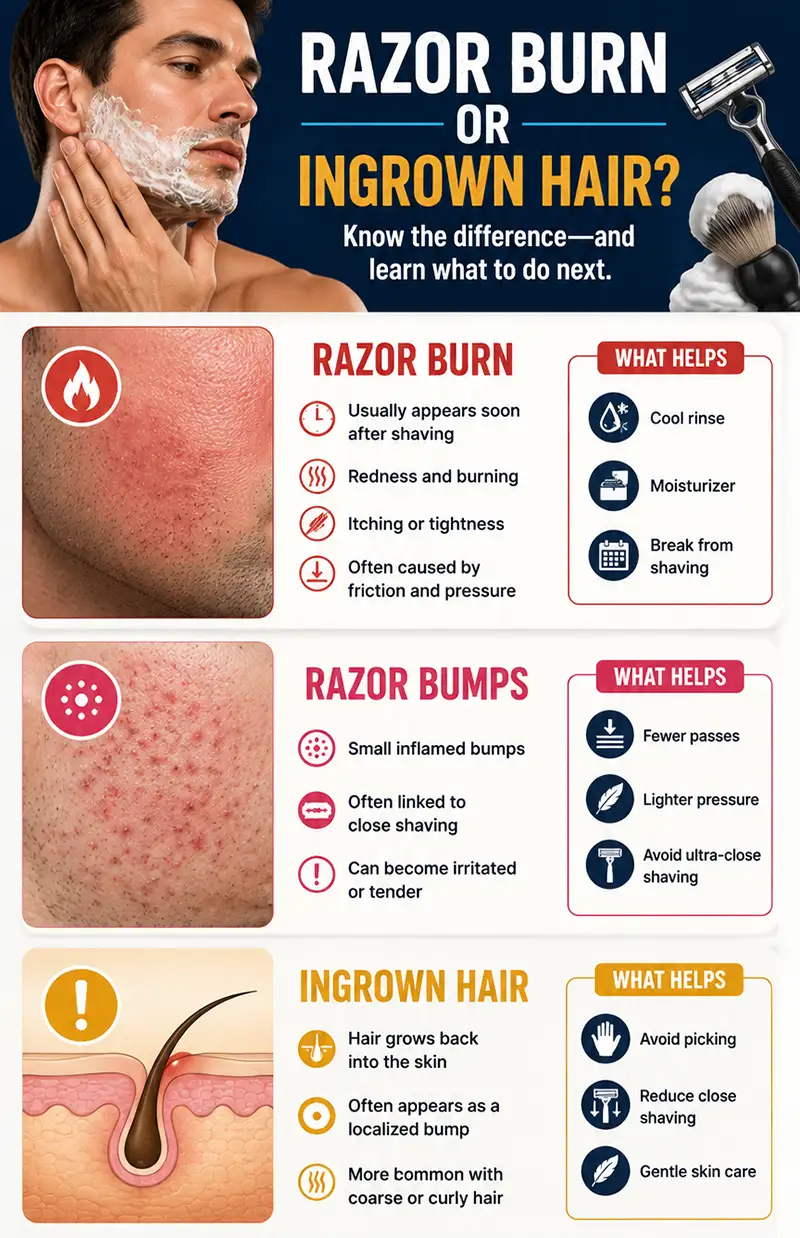
Razor burn usually appears soon after shaving. The skin may look red and feel hot, tight, itchy, or sore. You may also notice small bumps or a stinging feeling.
Shaving rash is a broader term. It can describe general irritation after shaving, including redness, dryness, inflamed bumps, or sensitive skin.
These problems can happen anywhere you shave, but the face and neck are especially tricky. Facial hair can be thick and coarse, while the skin around the jaw and neck can be uneven. That makes it easy to apply too much pressure or make several passes over the same area.
It is also important to know the difference between razor burn and ingrown hairs. Razor burn is usually a surface irritation caused by shaving. Ingrown hairs happen when a cut hair curls back into the skin and causes a raised, inflamed bump.
Common Symptoms
You may be dealing with razor burn if your skin has one or more of these signs after shaving:
- Red or pink skin.
- A burning or stinging feeling.
- Mild to moderate itching.
- Small red bumps.
- Skin that feels tight or dry.
- Tenderness when you touch the area.
- Mild flaking as the irritation settles.
The timing can also tell you a lot. Razor burn often shows up within minutes or shortly after shaving. Ingrown hairs usually take longer to develop.
How Long Does Razor Burn Last?
Mild razor burn often improves on its own within a few hours to a couple of days.
How long it lasts depends on how irritated the skin is and what you do afterward. Shaving the same area again, scratching it, using harsh skincare products, or creating more friction can make the problem last longer.
That is why prevention is usually easier than trying to calm badly irritated skin later.
What Causes Shaving Rash and Razor Burns?
There is rarely just one cause. In most cases, razor burn comes from a combination of friction, pressure, poor preparation, and repeated passes.
When you shave, the blade moves directly across the skin while cutting the hair. If the skin is dry or the razor does not glide well, friction increases. The more friction you create, the more likely the skin is to become irritated.
Here are some of the most common causes.
- Dry shaving: Shaving without water or lubrication creates extra drag.
- Too much pressure: Pressing the razor into your skin increases friction and irritation.
- Too many passes: Going over the same spot again and again can leave the skin raw.
- Dull blades: A worn blade may pull at hairs and force you to use more pressure.
- Poor lubrication: Too little shaving cream or gel allows the blade to drag.
- Shaving against the grain: This can give a closer shave but may increase irritation for some people.
- Very hot water: Hot water can leave already sensitive skin feeling dry and stripped.
- Harsh aftershaves: Strong alcohol or fragrance can sting freshly shaved skin.
- Poor razor maintenance: Hair, cream, and buildup can prevent a razor from working smoothly.
Skin and Hair Factors
Your skin and hair type also affect how easily you develop irritation.
If your skin is dry or extra sensitive, you may see redness sooner than others. Thick or curly hair makes things tougher too. It can push against the blade or curl back into the skin after it’s cut — like a tiny spring.
Facial hair adds another wrinkle. Growth direction often shifts across the face. Your cheeks might grow down while your neck sends hairs sideways or up. Shaving as if everything runs the same way usually means extra passes and more irritation.
One more common slip-up is thinking oily skin is safe. It isn’t. Even oily skin can get its barrier damaged by rough shaving or harsh cleansers. So using gentler strokes and milder products helps, no matter your skin type.
Common Shaving Mistakes
Some shaving habits seem harmless but can slowly increase irritation.
One of the biggest mistakes is trying to get the closest shave possible on every pass. Pressing harder does not always give you a better result. It often just creates more friction.
Other common mistakes include:
- Shaving against the grain from the first pass.
- Using short, repeated strokes over one spot.
- Shaving without enough shaving cream or gel.
- Using a blade that has started to tug.
- Shaving too often without giving irritated skin time to recover.
- Scrubbing the skin hard before or after shaving.
- Applying heavily scented products immediately after shaving.
Once you identify these habits, preventing razor burn becomes much easier.
How to Prevent Shaving Rash and Razor Burns Before Shaving?
Good shaving starts before the razor ever touches your skin.
The main goal of pre-shave preparation is simple: clean the skin, soften the hair, and reduce friction.
Skipping this stage may save a minute, but it can make the actual shave much harder.
Start With Clean Skin
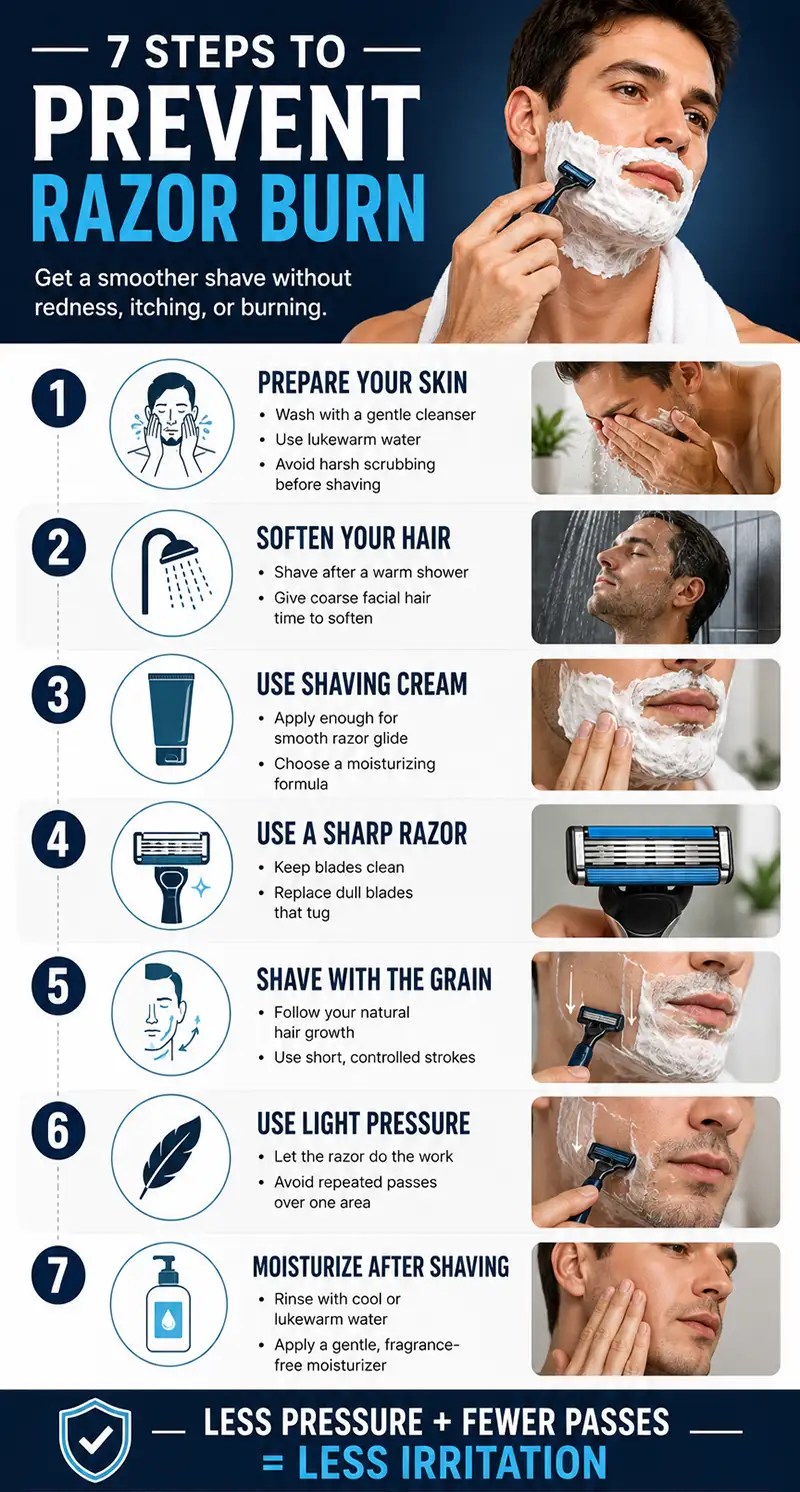
Begin by washing the area with a gentle cleanser and lukewarm water.
This helps remove sweat, oil, dirt, and leftover skincare products. Clean skin also gives your shaving cream a better surface to work on.
Don’t scrub hard right before shaving. A rough exfoliant might seem like it will stop bumps, but too much friction before the blade touches your skin often makes irritation worse.
For sensitive skin, a simple routine is often better:
- Wash gently.
- Rinse with lukewarm water.
- Pat the skin lightly.
- Apply your shaving product.
Soften the Hair First
Soft hair is easier to cut than dry, stiff hair.
One of the easiest ways to soften facial hair is to shave after a warm shower. The water helps hydrate the hair and makes it easier for the blade to move through it.
You can also use a warm, damp towel for a few minutes if you are not showering first.
Do not make the water extremely hot. Very hot water can leave some people’s skin feeling dry and uncomfortable.
Use the Right Shaving Product
Shaving cream, gel, or lotion is not just about making the shave feel smooth. It helps reduce the amount of friction between the blade and your skin.
Apply enough product to create a good layer over the hair. When your skin starts to feel dry as you shave, add more shaving cream or gel. Don’t keep running the blade over the same spot again and again.
For sensitive skin, choose products that help keep the skin moist and let the razor glide with ease. Strong scents are best avoided, too.
Ingredients such as glycerin, aloe vera, and other skin-conditioning agents can help create a more comfortable shaving experience.
Choose the Right Razor
Your shaving tool matters just as much as your technique.
A clean, sharp razor should move across the skin without requiring much force. When the blade becomes dull, you may notice tugging, poor cutting, and the need to make extra passes.
That is usually a sign that it is time to replace the blade.
For people who frequently struggle with razor burn, an electric shaver may also be worth considering. Electric razors may not give quite the same close shave as a regular blade. Still, some people find them gentler on the skin since the blade has less direct contact with it.
The best choice depends on your skin, hair type, and how close you want the shave to be. How often you shave matters too, so what works well for one person may not work for another.
Use the Correct Shaving Technique:
Even a great razor can cause irritation when you use too much pressure or keep shaving the same area.
Your goal should be to remove the hair efficiently while creating as little unnecessary friction as possible.
Shave With the Grain First
Before shaving, take a moment to feel which direction the hair grows.
Start by shaving with the grain. This usually puts less stress on the hair and skin than immediately shaving against it.
Use short, controlled strokes and let the blade do the work.
On areas where you need a closer result, you can consider a second pass. But you do not always need one. If your skin gets irritated easily, a slightly less close shave may be a much better trade-off.
Use Light Pressure
This is one of the biggest lessons I recommend to anyone who deals with razor burn.
Do not press hard.
A sharp, well-maintained razor should not need heavy pressure to cut hair. Pressing harder may flatten the skin against the blade and increase irritation without giving you a meaningfully better shave.
Use a light hand, especially around the neck and other uneven areas.
Keep the Razor Moving
Avoid leaving the blade on one patch of skin for too long.
Use smooth strokes and rinse the razor regularly to remove trapped hair and shaving product. A clogged razor does not glide or cut as efficiently.
When you reach curves or difficult areas, slow down instead of pushing harder.
Reduce the Number of Passes
Every pass adds more friction.
A simple approach is:
- First pass: shave with the grain.
- Second pass: only where extra closeness is needed.
- Final touch-up: use only when necessary.
Trying to make every part of your skin perfectly smooth can be a fast way to turn a normal shave into an irritated one.
For sensitive skin, fewer passes often beat a closer shave.
How to Prevent Razor Burn When Shaving Sensitive Skin?
Sensitive skin needs a little more care because it may react quickly to friction, pressure, and harsh products.
For Sensitive Facial Skin
Use a well-lubricated shave and keep your strokes controlled.
Avoid using a rough exfoliant immediately before shaving, and do not keep chasing tiny missed hairs. If one small patch needs several passes, it may be better to leave it slightly less close.
A new shaving product should also be tested carefully. Even products marketed for sensitive skin can irritate some people.
For the Neck
The neck is one of the hardest areas to shave because hair growth can change direction from one small section to another.
Instead of automatically shaving upward, map the direction of growth first. Then shave with that direction on the first pass.
Use lighter pressure around the jawline and neck because these areas can be uneven and easy to overwork.
For Body and Intimate Areas
Long body hair is often easier to manage after trimming it shorter first.
Use plenty of lubrication and take your time around skin folds and curves. Avoid shaving over cuts, bumps, or already irritated skin.
After shaving, loose clothing can help reduce rubbing and friction.
Razor Maintenance Matters More Than Most People Think:
A razor that is dirty, clogged, or worn out can make a good shaving routine much less effective.
Keep the Blade Clean
During shaving, rinse the razor regularly to clear away hair and cream.
When you finish, rinse it thoroughly and allow it to dry properly. Do not leave the blade sitting in pooled water.
A clean razor is easier to control and less likely to drag.
Know When to Replace the Blade
There is no single replacement schedule that works perfectly for everyone. Your shaving frequency, hair thickness, blade type, and skin sensitivity all matter.
Instead, pay attention to performance.
Replace the blade when it:
- Starts pulling or tugging hair.
- Feels rough instead of smooth.
- Requires more pressure than usual.
- Causes noticeably more irritation.
- Shows visible damage or corrosion.
When a blade stops giving you a smooth cut without effort, replacing it can make a surprising difference.
What to Apply After Shaving to Prevent Irritation:
Your routine does not end when you put the razor down.
The first few minutes after shaving are a good time to focus on calming the skin and restoring moisture.
Rinse and Cool the Skin
Rinse away leftover shaving cream with cool or lukewarm water.
Then gently pat your skin dry. Avoid rubbing the area with a rough towel because freshly shaved skin can be more sensitive to friction.
Use a Gentle Moisturizer
A simple, fragrance-free moisturizer can help reduce dryness and tightness after shaving.
Look for ingredients such as:
- Glycerin.
- Aloe vera.
- Panthenol.
- Ceramides.
Choose a lighter product if your skin becomes oily easily and a richer moisturizer if your skin tends to feel dry.
Consider a Soothing Aftershave
A gentle aftershave balm can be useful when your skin needs extra comfort after shaving.
I usually prefer soothing, moisturizing products over strong ones that give your skin a sharp burn. If an aftershave keeps stinging or makes your skin feel tight, it may not be doing your skin any favors.
What to Avoid Immediately After Shaving
Freshly shaved skin does not need a complicated skincare routine.
Avoid:
- Harsh scrubs.
- Strong fragrance.
- Products that cause obvious burning.
- Excessive exfoliation.
- Picking or scratching bumps.
- Anything that adds unnecessary friction.
The simpler your routine, the easier it is to identify what actually works for your skin.
How to Stop Razor Burn Fast:
Even with a good shaving routine, irritation can still happen. When it does, the best approach is to stop adding more stress to the skin.
First 30 Minutes
Right after you notice burning or redness:
- Stop shaving the irritated area.
- Rinse the skin gently with cool or lukewarm water.
- Pat it dry with a clean, soft towel.
- Apply a simple, fragrance-free moisturizer.
- Avoid rubbing, scratching, or picking at the skin.
The goal is to calm the area, not to treat it with a dozen products.
During the Next 24 Hours
Give irritated skin time to recover.
Avoid another close shave until the redness and burning have settled. Also try to reduce friction from tight collars, helmets, straps, or clothing that rub against the area.
Keep your skincare routine simple. Heavy exfoliation or strong active ingredients can make already irritated skin feel worse.
When Cold Compresses Help
A cool compress can provide temporary relief when the skin feels hot, itchy, or irritated.
Use a clean, cool, damp cloth for a short period. Do not place ice directly on your skin. That can cause another type of irritation.
How to Prevent Razor Bumps and Ingrown Hairs?
Razor burn and razor bumps are often confused, but they are different problems.
Razor burn is usually a quick irritation after shaving. Ingrown hairs happen when a cut hair grows back into the skin instead of growing outward.
If you have coarse or curly hair, you may be more likely to develop ingrown hairs after a very close shave.
Understand the Difference
A simple way to tell them apart is timing and appearance.
- Razor burn: often appears soon after shaving and may look like general redness or irritation.
- Ingrown hair: often appears later as a raised, localized bump around a hair.
- Razor bumps: can refer to multiple inflamed bumps caused by hairs growing into or irritating the skin.
You can also have more than one problem at the same time.
Reduce the Risk
The easiest way to lower the chance of razor bumps is to avoid unnecessarily close shaving.
Try these habits:
- Shave with the grain on your first pass.
- Use a sharp, clean blade.
- Keep pressure light.
- Limit repeated passes.
- Avoid stretching the skin more than necessary.
- Do not pick at bumps after shaving.
- Give irritated skin time to recover before shaving again.
If you regularly get ingrown hairs, leaving a tiny amount of stubble may actually give you better skin than chasing a perfectly smooth finish.
Exfoliation: When and How
Exfoliation can help remove dead skin buildup, but more is not always better.
Don’t scrub hard right after shaving. Freshly shaved skin is already more exposed and can get irritated by extra friction.
Between shaves, gentle exfoliation may help some people. It can help clear away dead skin and lower the chance of bumps. Start slowly and stop if you notice dryness, stinging, or increased redness.
Your goal should be healthy skin, not perfectly polished skin.
Best Shaving Routine for Rash-Free Skin:
A simple routine is easier to follow and easier to troubleshoot when something causes irritation.
Step-by-Step Routine
- Wash the skin with a gentle cleanser.
- Use lukewarm water to soften the hair.
- Apply enough shaving cream or gel for good glide.
- Use a clean, sharp razor or suitable electric shaver.
- Shave with the grain using light pressure.
- Rinse the blade regularly while shaving.
- Make as few passes as possible.
- Rinse the skin with cool or lukewarm water.
- Pat the skin dry instead of rubbing.
- Apply a fragrance-free moisturizer or gentle aftershave balm.
This routine works because every step has the same goal: reduce friction while protecting the skin.
Simple Routine for Very Sensitive Skin
Sensitive skin often benefits from doing less.
Instead of trying to get an extremely close shave every day:
- Consider trimming rather than shaving completely.
- Try an electric foil shaver designed for gentle shaving.
- Avoid repeatedly touching up small missed spots.
- Use a mild moisturizer after shaving.
- Increase the time between close shaves if irritation keeps returning.
A slightly less close shave that leaves your skin comfortable is usually better than a perfect shave followed by two days of redness.
Best Products for Preventing Shaving Rash and Razor Burns:
The best shaving setup is not necessarily the most expensive one. What matters is how well the product works with your skin, hair, and shaving style.
Best Razor for Sensitive Skin
When choosing a traditional razor, look for:
- Sharp cutting elements.
- Smooth movement over the skin.
- Good lubrication.
- Easy rinsing and cleaning.
- A handle that gives you precise control.
If your razor keeps pulling at your hair, needs extra pressure, or leaves your skin sore, try changing the blade or razor first. That may help more than switching to a new aftershave.
Best Electric Shaver for Sensitive Skin
Electric shavers can be a useful alternative for people who struggle with traditional razors.
When comparing models, pay attention to:
- Foil vs. rotary design: Foil shavers can offer precise, straight-line movement, while rotary models use circular cutting heads.
- Wet and dry use: Wet shaving can add lubrication and may feel more comfortable for some users.
- Pressure control: Some devices are designed to help prevent excessive pressure.
- Flexible heads: These can improve contact with curved areas.
- Cleaning system: Easy cleaning makes regular maintenance much more practical.
- Battery life: A reliable battery is especially useful if you shave often or travel.
An electric shaver is not automatically irritation-free. Pressing too hard or repeatedly going over the same patch can still cause problems.
Best Shaving Cream or Gel
A good shaving cream or gel should allow the razor to glide instead of drag.
For sensitive skin, prioritize:
- Good lubrication.
- Easy rinsing.
- Moisturizing properties.
- Minimal fragrance.
- A formula that does not leave your skin feeling tight.
Avoid assuming that thicker foam is always better. The real test is how your skin feels during and after the shave.
Best Aftershave Balm
A gentle aftershave balm can be a better choice than a strong splash for easily irritated skin.
Look for products with moisturizing and soothing ingredients. Don’t pick one just because it gives a strong cool or burning feeling.
A good aftershave should leave your skin calm and comfortable. It shouldn’t feel like your skin needs to recover from the product itself.
Razor vs. Electric Shaver: Which Is Better for Razor Burn?
There is no single winner for everyone.
Your skin type, hair texture, preferred closeness, and shaving frequency all matter.
Traditional Razor
Advantages
- Can provide a very close shave.
- Gives you precise control.
- Requires little equipment.
- Familiar to most people.
Disadvantages
- The blade has direct contact with the skin.
- Multiple passes can quickly increase irritation.
- A dull blade may pull at hair.
- Pressure has a big impact on comfort.
Electric Shaver
Advantages
- Can reduce direct blade-to-skin contact.
- Often works well for quick daily shaving.
- May be easier for people who frequently experience razor burn.
- Some models offer wet shaving and skin-protection features.
Disadvantages
- May not provide the same ultra-close result as a traditional razor.
- Cutting heads need regular cleaning.
- Some users still experience irritation from excessive pressure or repeated passes.
- Good electric shavers can cost more upfront.
Which One Should You Choose?
If your main goal is the closest possible shave, a traditional razor may still be your preference.
If your skin reacts badly to close blade contact, an electric shaver may be the better choice.
For many people with recurring irritation, the better tool is simply the one that lets them get a clean-looking shave with fewer passes and less pressure.
Mistakes That Make Razor Burn Worse
Sometimes the biggest problem is what you do after irritation begins.
Avoid these common mistakes:
- Shaving again over irritated skin: This adds more friction before the skin has recovered.
- Using a dull blade: It can increase pulling and force.
- Dry shaving: Less lubrication means more drag.
- Applying heavy pressure: Pressure can turn a normal shave into an irritating one.
- Immediately shaving against the grain: This may increase irritation and ingrown-hair risk.
- Using very hot water: It may leave some skin feeling dry and uncomfortable.
- Scrubbing the area: Irritated skin needs less friction, not more.
- Using strong fragrance after shaving: Fragrance can sting sensitive, freshly shaved skin.
- Picking at bumps: This can further irritate the area and may increase the chance of marks or infection.
- Shaving before the skin recovers: Repeated irritation can become a cycle.
The simple rule is this: once your skin starts burning, stop trying to make the shave perfect.
When Should You Stop Treating It Yourself?
Most mild razor burn can be managed with gentle skincare and a break from shaving.
Signs of Normal Irritation
Typical mild irritation may include:
- Temporary redness.
- Mild burning.
- Some itching.
- Slight tightness.
- Gradual improvement over time.
The key is that the symptoms should start getting better rather than progressively worse.
Signs You May Need Medical Advice
Consider getting medical advice when you notice:
- Severe or increasing pain.
- Significant swelling.
- Pus or drainage.
- Redness that continues spreading.
- Skin that becomes increasingly warm or tender.
- Fever or feeling unwell.
- Persistent bumps that do not improve.
- Repeated irritation despite changing your shaving routine.
Persistent or severe symptoms may be caused by something other than simple razor burn, so it is worth getting them checked.
FAQs:
How can I prevent razor burn every time I shave?
No method can promise zero irritation. But you can lower the risk a lot by prepping your skin, softening the hair, using enough shave cream, and keeping your blade sharp. Use light pressure too, and try not to make too many passes over the same spot.
In many cases, your shaving method matters more than the brand name on the razor.
Is shaving against the grain bad for your skin?
Not always. Still, it may cause more irritation for some people because it cuts the hair closer to the skin.
If shaving against the grain often leaves you with burning or bumps, try shaving with the grain first. You may find that is close enough. There is no need to chase a super-close shave if it keeps upsetting your skin.
Is an electric shaver better for sensitive skin?
It can be.
Some people find electric shavers easier on the skin because they do not use an exposed blade right against it. Still, results can vary based on the shaver, your technique, how much pressure you use, and your skin type.
How often should I replace my razor blade?
Change the blade when it starts to tug, feels rough, needs more pressure, or causes extra irritation.
There is no need to keep using a blade just because you have only used it a certain number of times.
Should I moisturize after shaving?
Yes. A gentle moisturizer can help ease dry or tight skin after shaving.
For sensitive skin, a fragrance-free moisturizer is often a good place to start.
Does shaving cream really prevent razor burn?
A good shaving cream or gel can lower friction and help the razor glide over your skin. It cannot stop all irritation, though. A dull blade, too much pressure, or too many passes can still cause razor burn.
How long should I wait before shaving again after razor burn?
Wait until the irritation has clearly gone down before shaving closely again.
Shaving over red, sore, or burning skin can make things worse. You may end up stuck in a cycle where the skin gets irritated again each time you shave.
Final Verdict:
The best way to prevent shaving rash and razor burns is not to find one magic product. It usually comes down to good prep, the right technique, clean tools, and simple aftercare.
Before you shave, soften the hair and use enough shaving cream or gel. During the shave, use light pressure, follow the direction of hair growth, and avoid going over the same spot too many times. Afterward, rinse gently, moisturize, and give irritated skin time to settle.
Most of all, don’t assume the closest shave is the best shave. A shave that leaves your skin smooth and calm is often better in the long run. A super-close shave may look great for a few hours, but it is not worth much if your skin ends up red, sore, or burning.
The right razor, electric shaver, shaving cream, or aftershave can help. Still, the biggest change often comes from using the right tool in the right way for your own skin.
Leave a Reply