
What did men use before electric razors made shaving faster and easier? The journey from traditional blades to modern electric shavers is full of clever ideas, new inventions, and big changes in grooming.
The history of electric razors shows how shaving tools changed over time. Early designs were simple and mechanical. Later, better motors, blades, and batteries made electric shavers more useful. Features focused on comfort and ease of use also helped make electric shaving more practical.
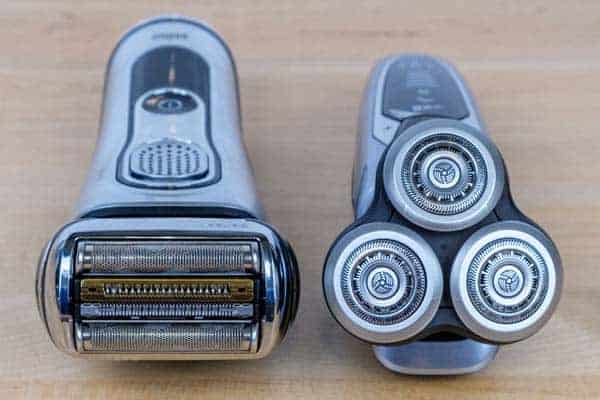
In this guide, I’ll take you through the main stages in the history of electric razors. We’ll look at the early ideas and first models. We’ll also cover the key changes that led to modern foil and rotary shavers from brands like Philips Norelco, Braun, and Panasonic.
You’ll learn about the major breakthroughs that shaped electric shaving. We’ll also look at how these changes continue to affect the way people shave and groom today.
Table of Contents:
1920: The Birth of the Electric Razor
The idea for an electric razor first came to Colonel Jacob Schick while he was recovering from an injury. He was hurt during gold exploration in Alaska and British Columbia in the 1910s. He found shaving difficult. With plenty of time to think, he designed a large shaver powered by an external motor. However, manufacturers rejected it because it was too bulky.

1925: The Magazine Repeating Razor
Schick was inspired by the weapons he had seen in the military. He then developed the Magazine Repeating Razor. Its design was based on the idea of repeating firearms. The blades were sold in clips. They could be loaded into the razor without touching them.
The Magazine Repeating Razor became successful. However, Schick returned to his work on a dry electric razor.
1927: A Fully Marketable Electric Dry Shaver
In 1927, Schick’s dry electric shaver was finally ready for the market. He believed strongly in its future. In 1928, he sold the assets of his razor company so he could focus on his new invention.
On May 13, 1930, Colonel Jacob Schick received patent No. 1,757,978 for his dry electric shaver. This marked the official birth of the electric razor as we know it today.
The 1930s – 1940s: The Birth of Electric Razors
The first electric razors appeared in the 1930s. This was a major step in shaving history. The early models were large and noisy. They were also hard to move around. Still, they offered a new and easier way to shave.
Colonel Jacob Schick patented his dry electric razor on May 13, 1930. The idea came to him while he was recovering from an injury. He was hurt during gold exploration in Alaska and British Columbia in the 1910s. He designed a large shaver with an external motor. Manufacturers rejected it because it was too large. His work was later put on hold during World War I. He eventually returned to the idea and patented his dry electric razor.
1940s to 1950s: The Golden Age of Electric Razors
Electric razors became much more popular during the 1940s and 1950s. Manufacturers began making new models with better designs and improved technology. Advertisements for electric razors also appeared in magazines and on television.
This period became known as the golden age of electric razors. More people started using them as part of their daily grooming routine.
In the 1940s, new technology helped bring wet/dry electric razors to the market. These models could be used in the shower or with shaving cream. This made electric razors more useful and convenient.
1960s to 1970s: The Introduction of Cordless Electric Razors
During the 1960s and 1970s, cordless electric razors became more common. They gave users more freedom while shaving. You no longer had to stay near a wall outlet.
The first battery-powered electric razors appeared in the late 1940s. In 1960, Remington introduced the first rechargeable battery-powered electric razor.
Early rechargeable models used nickel-cadmium batteries. Later, nickel-metal hydride batteries became more common. Today, many electric razors use lithium-ion batteries. These batteries do not have the same memory effect as older battery types.
1980s to 1990s: The Era of Advanced Technology
During the 1980s and 1990s, manufacturers continued to improve electric razors. New features included rotary heads and multi-blade systems. These changes helped make shaving closer and more comfortable.
In the 1980s, rotary electric razors became more popular. Many models had three or four rotating blades. This helped give users a smoother shave.
During the same period, foil electric razors also became popular. These razors used a thin metal foil over the blades. The foil helped protect the skin. It also allowed the blades to cut hair closely.
2000s to Today: Modern Electric Razors
In the 2000s, electric razors continued to improve. New features included multi-directional heads, flexible blades, and waterproof designs.
Today, electric razors come in many styles and designs. They also offer many features for different shaving needs.
Electric razors have come a long way since the early bulky models. Today, they are smaller, smarter, and easier to use. They offer more comfort and more choices.
Whether you prefer a wet or dry shave, there is an electric razor to suit your needs.
History of Electric Razor FAQs
Q: Who invented the electric razor?
A: The electric razor was invented by Jacob Schick, an American inventor and businessman, in 1928.
Q: When did electric razors become popular?
A: Electric razors became more popular in the 1950s and 1960s. Better technology made them easier and more useful.
Q: What were the early electric razors like?
A: Early electric razors were large and heavy. They needed an external power source. Many had to be plugged into a wall outlet.
Q: When were battery-powered electric razors introduced?
A: Battery-powered electric razors became available in the 1960s. They were easier to carry and use than older models.
Q: How did electric razors change shaving?
A: Electric razors gave people a faster and easier way to shave. Many models could be used without water or shaving cream. They also reduced the need to replace blades as often.
Q: What were the major advancements in electric razor technology?
A: Electric razors have improved in many ways over the years. These include rotary blades, multiple cutting elements, wet/dry use, and automatic cleaning systems. These features have made shaving easier and more comfortable.
Q: How has the design of electric razors changed over time?
A: Early electric razors were large and bulky. Modern models are usually smaller and easier to hold. Many also have curved shapes and other features that make shaving more comfortable.
Q: Are electric razors more expensive than manual razors in the long run?
A: An electric razor usually costs more at first. But it may save money over time. You may not need to buy new blades as often. You may also spend less on shaving cream and aftershave.
The total cost will depend on the razor, how often you use it, and the parts you need to replace.
Conclusion
Electric razors have come a long way since the early models of the 1930s. Those first machines were large and noisy. They were also hard to carry. Over the years, new technology changed how electric razors worked. They became smaller, lighter, and easier to use.
Today, millions of men and women use electric razors around the world. Modern models come with features like flexible heads, multiple blades, wet and dry use, rechargeable batteries, and easy cleaning systems. These features make shaving faster and more convenient.
The history of electric razors shows how simple tools can change over time. What started as a large and bulky machine has become a useful part of daily grooming for many people. As technology improves, electric razors may become even easier and more comfortable to use.
Leave a Reply