
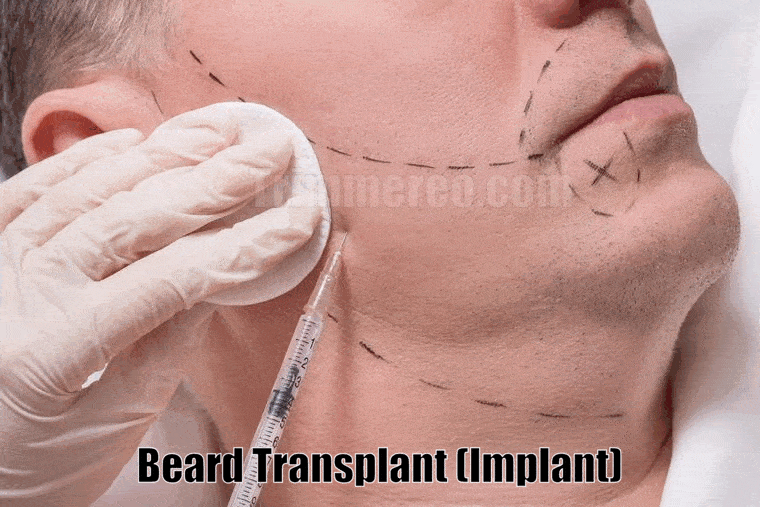
A beard transplant is a surgical procedure where hair follicles are moved from one part of the body, often the scalp, to the beard area. It can help fill patchy spots or create a thicker, fuller-looking beard.
A full and well-shaped beard has become more popular in recent years. But not everyone naturally grows facial hair evenly. Some people deal with thin areas, gaps, or slow beard growth. For those struggling with these issues, a beard transplant may offer a possible solution.
In this guide, we’ll explore beard transplants in detail. We’ll cover how the procedure works, its possible benefits, and what you can expect before, during, and after the process.
Understanding Beard Transplants
- What is beard transplant?
- Unlike traditional hair transplant procedures, a beard transplant is designed specifically to restore or improve facial hair growth. It focuses on creating a fuller beard or filling areas where facial hair is thin or missing.
- Causes of patchy or thin facial hair:
- Genetics: Some individuals are genetically predisposed to sparse beard growth.
- Hormonal imbalances: Changes in hormone levels can affect beard growth and may lead to lower beard density in some people.
- Medical conditions: Certain health conditions can also impact facial hair growth and cause uneven or reduced beard development.
- Scarring: Scars on the face can disrupt hair follicles, leading to patchy beard growth.
- Suitability of beard transplants:
- Beard transplants are suitable for individuals with different hair loss patterns and goals, ranging from minor touch-ups to full beard reconstruction.
Preparation and Pre-Procedure
Before undergoing beard transplant, proper preparation is essential. Here’s what you need to know:
- Choose a reputable and experienced hair transplant surgeon:
- Extensive research and referrals can help you find a skilled professional specializing in beard transplants.
- Schedule a consultation appointment:
- During the consultation, you can discuss your expectations, evaluate your candidacy, and address any concerns you may have.
- Follow pre-procedure instructions:
- The surgeon will provide specific instructions to follow before the transplant, such as avoiding certain medications or refraining from alcohol consumption.
The Beard Transplant Procedure
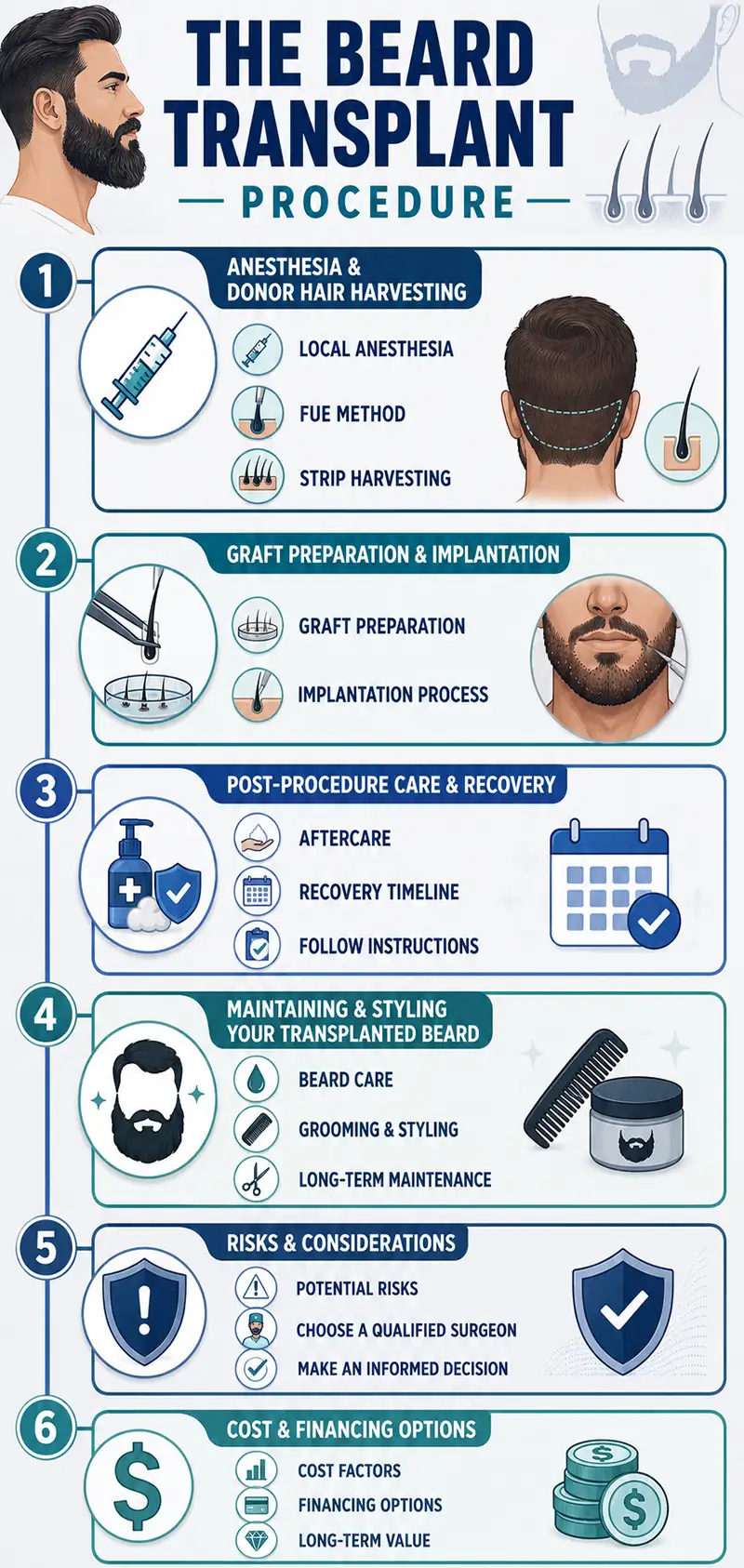
Anesthesia and Donor Hair Harvesting:
To ensure a comfortable experience, anesthesia is administered locally. The procedure involves the following steps:
- Local anesthesia:
- The surgeon will apply a local anesthetic to numb the donor and recipient areas, ensuring you feel little to no pain during the procedure.
- Donor hair harvesting:
- Two primary methods are used: Follicular Unit Extraction (FUE) and Strip Harvesting.
- FUE: In this method, individual hair follicles are removed one at a time from the donor area, which is usually the back of the head.
- Strip Harvesting: In this technique, the surgeon removes a small strip of skin with hair follicles from the donor area. The individual follicles are then taken from that strip and prepared for transplant.
- The surgeon will choose the best method based on factors like how much hair needs to be transplanted and the quality of the donor hair. Each person’s situation is different, so the right approach may vary.
- Two primary methods are used: Follicular Unit Extraction (FUE) and Strip Harvesting.
Graft Preparation and Implantation
Once the donor hair has been harvested, the grafts are prepared and implanted in the recipient area:
- Graft preparation:
- The extracted hair follicles are carefully sorted and prepared for implantation to preserve their integrity and ensure optimal results.
- Implantation process:
- The surgeon strategically places the grafts into the recipient area, considering factors such as the direction and angle of hair growth, to create a natural-looking beard.
Post-Procedure Care and Recovery
Proper care and adherence to post-procedure instructions are crucial for successful healing and optimal results:
- Post-procedure care guide:
- The surgeon will provide you with specific instructions for cleaning the transplanted area, avoiding trauma, and managing any discomfort or swelling.
- Recovery timeline:
- Understand the typical recovery phases, including scabbing, shedding of transplanted hair, and eventual regrowth.
- Importance of following instructions:
- To ensure the best outcome, it’s essential to follow the surgeon’s post-procedure guidelines diligently.
Maintaining and Styling Your Transplanted Beard
Now that you have your transplanted beard, it’s important to care for and style it effectively:
- Proper beard care techniques:
- Learn the best practices for washing, conditioning, and moisturizing your transplanted beard to keep it healthy and vibrant.
- Grooming tips and styling advice:
- Discover various techniques for shaping and styling your beard to enhance its appearance and complement your facial features.
- Long-term maintenance strategies:
- Regular trimming, using beard trimmers, and incorporating a grooming routine will help you maintain your transplanted beard’s health and desired shape.
Risks and Considerations
While beard transplants can offer trans-formative results, it’s important to understand the potential risks and considerations involved:
- Potential risks and complications:
- Infection, scarring, and suboptimal growth are potential risks associated with beard transplants.
- Choosing a qualified surgeon:
- Selecting an experienced and reputable surgeon can significantly minimize the risks and increase the chances of a successful transplant.
- Making an informed decision:
- Consider the benefits and potential drawbacks before deciding if beard transplant is the right choice for you.
Cost and Financing Options
Understanding the financial aspect of beard transplant is essential:
- Factors influencing the cost:
- The extent of the procedure, the complexity of the case, and the expertise of the surgeon can impact the overall cost.
- Financing options and insurance coverage:
- Research potential financing options or insurance coverage that may be available to help with the cost of the procedure.
- Long-term value:
- While the upfront cost may seem significant, it’s crucial to consider the long-term value and benefits of having a full, well-groomed beard.
Beard Transplant FAQs:
Who is a good candidate for beard transplant?
Good candidates for beard transplant include men who:
*Have a history of male pattern baldness
*Have a well-defined beard area
*Have healthy hair follicles
What are the risks of beard transplant?
The risks of beard transplant are similar to those of any other surgical procedure, including:
*Bleeding
*Infection
*Scarring
*Uneven hair growth
What are the benefits of beard transplant?
The benefits of beard transplant include:
*A fuller, more natural-looking beard
*Increased self-confidence
*Improved appearance
What is the cost of beard transplant?
The cost of a beard transplant can vary based on factors like the surgeon’s experience, the clinic’s location, and how many hair follicles need to be moved.
Compared with many other hair restoration treatments, a beard transplant is often seen as a more affordable option. However, the total cost can still differ a lot depending on each person’s needs and the treatment plan.
How is beard transplant performed?
A beard transplant is usually done with local anesthesia, so the area stays numb during the procedure. The surgeon creates small openings in the beard area and carefully places individual hair follicles taken from the donor area.
Over time, these transplanted follicles grow new beard hair. The final result develops gradually as the hair starts to grow and blend with the existing beard.
How long does it take for beard transplant to heal?
The healing process for beard transplant typically takes about 2-4 weeks. During this time, the transplanted hair follicles will fall out, but new hair will start to grow in about 3-4 months.
How to care for beard transplant?
After beard transplant, it is important to care for the area properly. This includes:
*Keeping the area clean and dry
*Applying antibiotic ointment
*Avoiding strenuous activity
Conclusion
Beard transplant can be a life-changing procedure for individuals seeking a fuller and more aesthetically pleasing beard. When you understand the process, prepare well, and follow the aftercare steps, the results can turn out really good. Each step matters more than it may seem at first.
It’s also a good idea to speak with a skilled and experienced surgeon before making a decision. They can guide you based on your needs and expectations. With the right approach and proper care, getting the beard you want starts to feel much more realistic—and the boost in confidence that comes with it is hard to ignore.
Leave a Reply