
A well-groomed beard can change the way your face looks. The right shape matters just as much as beard growth. The Italian beard style stands out for its clean lines, shaped moustache, and neat facial hair.
Whether you prefer a classic Italian goatee or a modern beard fade, there are several ways to get this look. Your face shape, beard growth, and personal style will help you choose the right one.
Table of Contents:
What Is an Italian Beard Style?
An Italian beard style is a grooming look built around clean edges, balanced shape, and controlled beard length. It isn’t one fixed design. It includes several traditional and modern looks inspired by Italian grooming.
The main idea is simple: keep your beard neat and give it a clear shape. This often means a trimmed moustache, clean cheek lines, tapered sideburns, and a tidy chin and jawline.
Some styles focus on the moustache and chin, while others cover the cheeks and jaw with short, blended facial hair.
Main Features of an Italian Beard
Most Italian-inspired beard styles share a few key features:
- Clean cheek lines: Give the beard a neat, defined upper edge.
- Shaped moustache: Keep it trimmed and either connected to the beard or separate.
- Tapered sideburns: Blend the sideburns into the beard for a smooth finish.
- Balanced chin and jaw: Choose a length that suits your face shape.
- Neat neckline: Remove stray hairs without trimming the neckline too high.
These details create a polished look without needing a very long or thick beard.
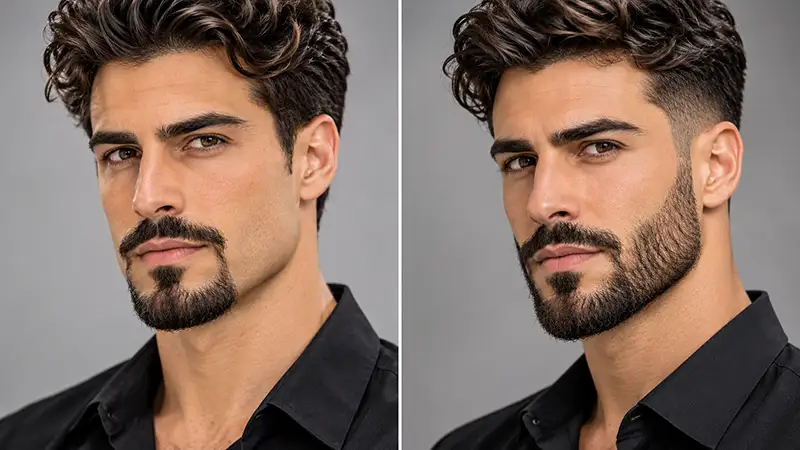
Traditional vs. Modern Italian Beard
Traditional Italian-inspired beards often focus on the moustache and chin, sometimes with clean-shaven cheeks. They may look similar to a classic goatee or pizzetto.
Modern styles offer more coverage. They often include faded sideburns, defined cheek lines, and fuller facial hair along the jaw.
| Feature | Traditional | Modern |
|---|---|---|
| Main look | Moustache and chin beard | Shaped full beard |
| Cheeks | Often clean-shaven | Covered or outlined |
| Sideburns | Natural | Tapered or faded |
| Chin | Main focus | Balanced with jaw |
| Overall look | Classic | Contemporary |
| Maintenance | Moderate | Moderate to high |
Neither style is better for everyone. Choose the one that suits your beard growth and preferred look. Since there is no single standard Italian beard design, showing your barber a reference photo can help.
8 Best Italian Beard Styles for Men
Italian-inspired beards come in many shapes and lengths. Here are eight popular options to consider.
1. Modern Italian Beard Fade
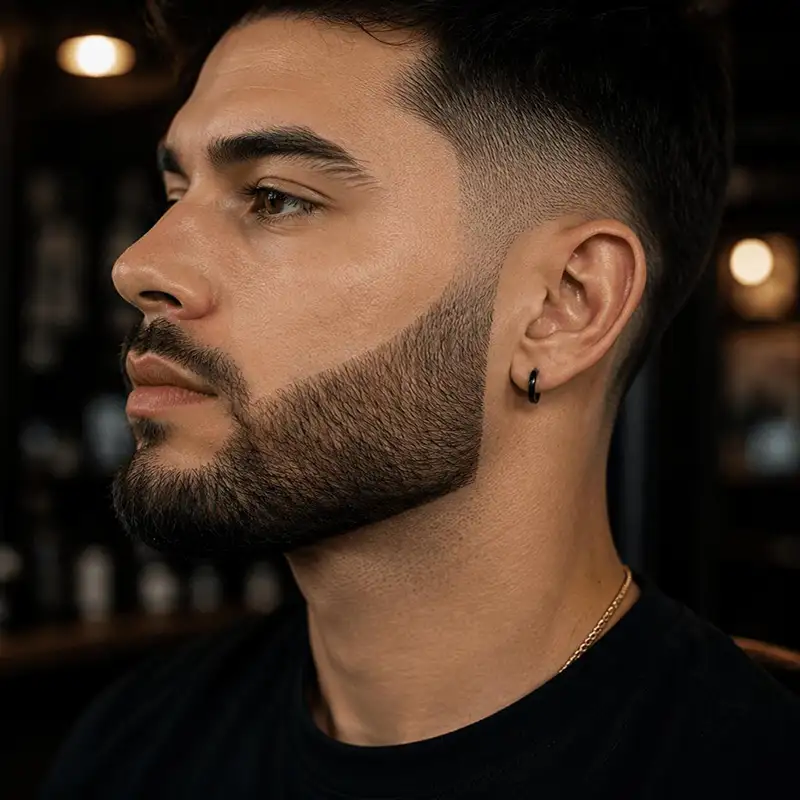
This style blends short sideburns into fuller facial hair around the cheeks, jaw, and chin. Clean cheek lines and a shaped moustache complete the look.
Who should try it? Men with fairly even beard growth who want a sharp, modern appearance.
Maintenance: High. Regular trimming keeps the fade and edges clean.
2. Classic Italian Beard
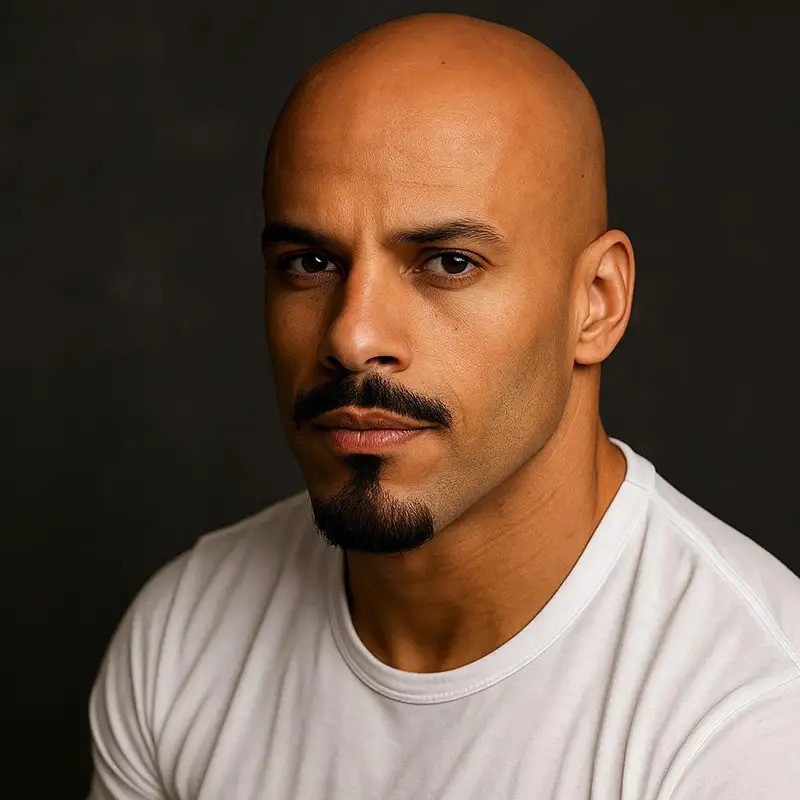
This traditional look focuses on the moustache and chin, with clean-shaven or very short cheek hair. The moustache may connect to the chin beard, creating a classic goatee-like shape.
Who should try it? Men with good moustache and chin growth but thinner cheek hair.
Maintenance: Moderate. Keep the moustache, chin, and cheek edges tidy.
3. Italian Short Boxed Beard

The short boxed beard covers the cheeks, jaw, and chin while keeping the overall length short. Clean edges and a shaped moustache give it a neat, professional look.
You can leave slightly more length around the chin for extra definition.
Who should try it? Men with even beard growth who want a smart everyday style.
Maintenance: Moderate. Trim and clean up the edges as needed.
4. Italian Goatee (Pizzetto)
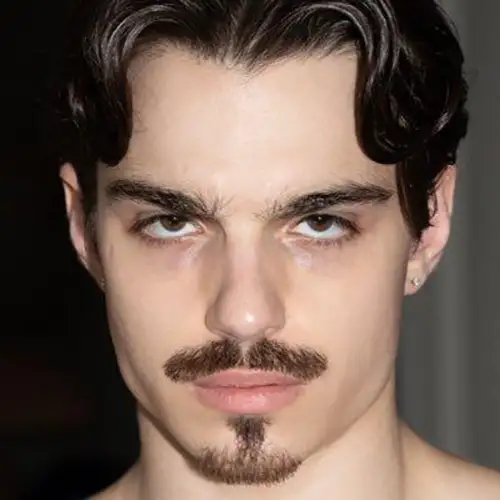
The Italian pizzetto focuses on the chin and moustache, with most of the cheek area shaved. The chin can be short and rounded or slightly longer.
This style works well with thinner cheek growth because it focuses on areas where your beard grows best.
Who should try it? Men with good moustache and chin growth who prefer less facial hair on their cheeks.
Maintenance: Moderate. Keep the cheeks clean and shape the chin and moustache.
5. Italian Extended Goatee

An extended goatee gives you more coverage than a traditional goatee. The moustache and chin remain the main features, but the beard also extends along the lower sides of the mouth and jaw.
You can keep the edges rounded or give them a sharper shape.
Who should try it? Men who like goatees but want more coverage around the lower face.
Maintenance: Moderate. Trim both sides evenly and keep the outline neat.
6. Italian Designer Stubble
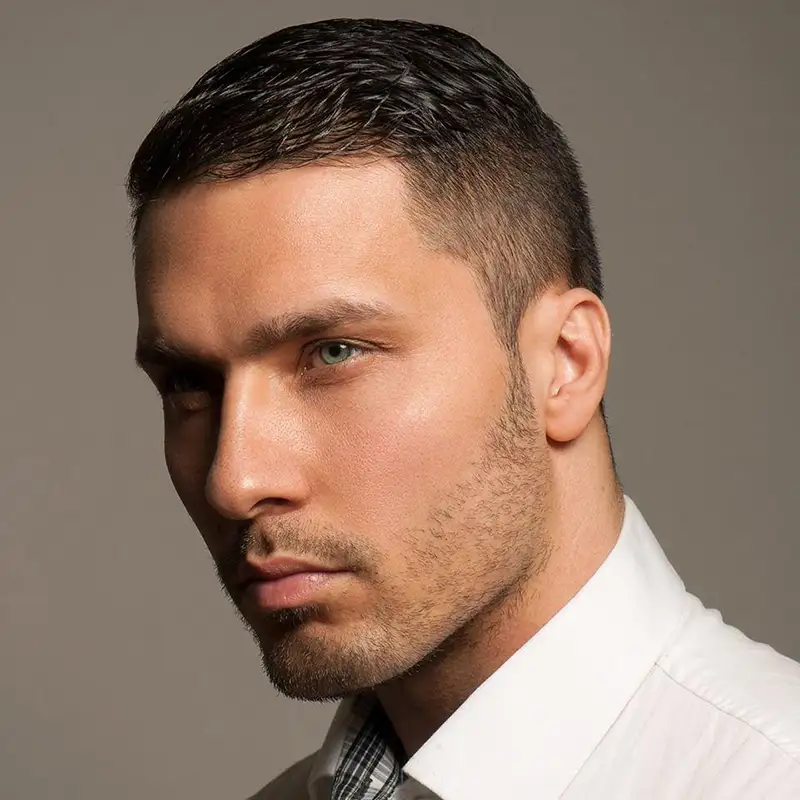
Designer stubble is a good choice if you prefer very short facial hair. It covers the cheeks, chin, jaw, and moustache area, with clean edges around the cheeks and neckline.
The short length makes it easy to pair with different hairstyles.
Who should try it? Men with lighter beard growth or anyone who prefers a simple, low-profile look.
Maintenance: Frequent. Trim regularly to keep the length even.
7. Balbo-Inspired Italian Beard

The Balbo is a distinct beard style that fits well with modern Italian grooming. It features a shaped chin beard and a separate moustache, with clean-shaven cheeks.
The gap between the moustache and chin beard is an important part of this look.
Who should try it? Men with good moustache growth who want a defined chin and a distinctive style.
Maintenance: Moderate to high. Keep both sections balanced and the surrounding areas clean.
8. Fuller Italian Beard with a Styled Moustache
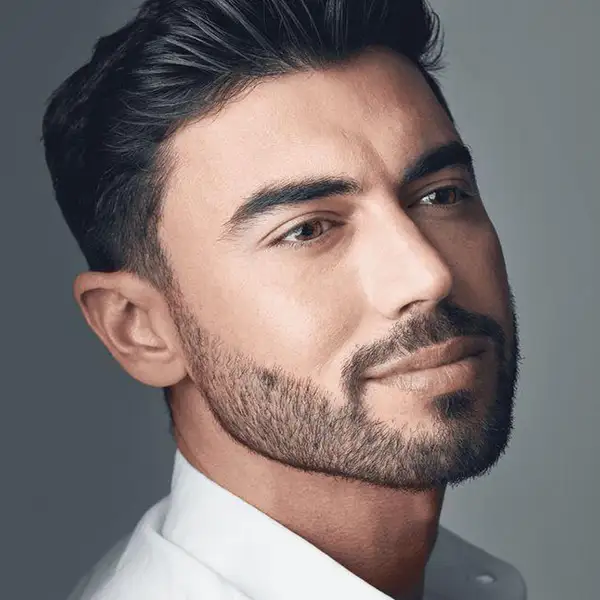
This style offers more coverage across the cheeks, jaw, and chin. The beard stays full but has a neat outline, tapered sideburns, and a carefully trimmed moustache.
You can keep the moustache short or leave it slightly longer for more character. Just make sure it doesn’t cover your upper lip.
Who should try it? Men with thick beard growth who prefer a fuller but well-kept look.
Maintenance: Moderate to high. Regular combing, trimming, and edge cleanup help keep the beard in shape.
Which Italian Beard Style Should You Choose?
The best Italian beard style depends on your face shape, natural beard growth, and how much time you want to spend grooming.
For example, a modern fade works well if you like sharp edges and blended sideburns. A pizzetto may be easier to manage if your cheek growth is patchy. A short boxed beard offers a good middle ground if you want more coverage.
Next, we’ll look at how to choose the right Italian Beard Style for Oval Face, along with tips for round, square, oblong, heart-shaped, and diamond-shaped faces.
Italian Beard Style for Oval Face
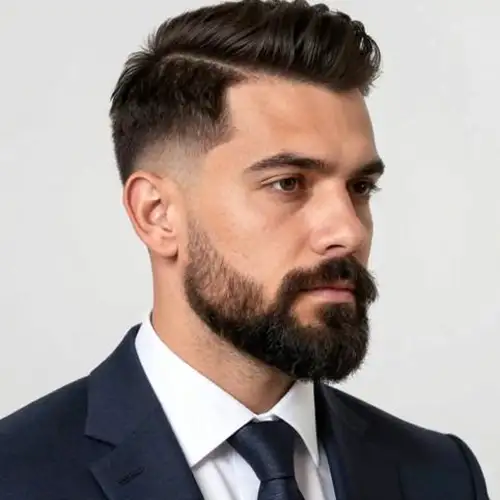
An oval face has balanced proportions, a slightly wider forehead, and a gently rounded jaw. This shape works well with many Italian beard styles.
A modern Italian fade, short boxed beard, or classic goatee can all be good choices. Pick one that suits your beard growth and preferred length.
Why Italian Beard Styles Suit Oval Faces
An oval face usually needs little visual adjustment. You have more freedom to try different beard shapes.
A fade can add jaw definition, while a short boxed beard helps frame the face. A classic goatee draws attention to the chin and moustache.
The key is balance. Too much length below the chin can make your face look longer. Keep the beard shape in line with your natural features.
Best Italian Beard Styles for Oval Faces
1. Modern Italian Beard Fade
Short sideburns blend into fuller hair around the jaw and chin. Keep the lower beard at a moderate length for a balanced look.
2. Italian Short Boxed Beard
This style covers the cheeks and jaw while keeping the beard short. Clean edges help define your natural jawline.
3. Classic Italian Connected Beard
A connected moustache and chin beard create a traditional look. Keep the cheeks clean and shape the chin to suit your jaw.
4. Medium-Length Italian Beard
This offers more coverage without making the face look too long. Keep the sides neat and avoid a pointed chin.
How to Choose an Italian Beard for Your Face Shape
Your face shape, beard growth, and preferred length all affect how a beard looks. Before choosing a style, look at your forehead, cheeks, jaw, and chin.
Here are some options for six common face shapes.
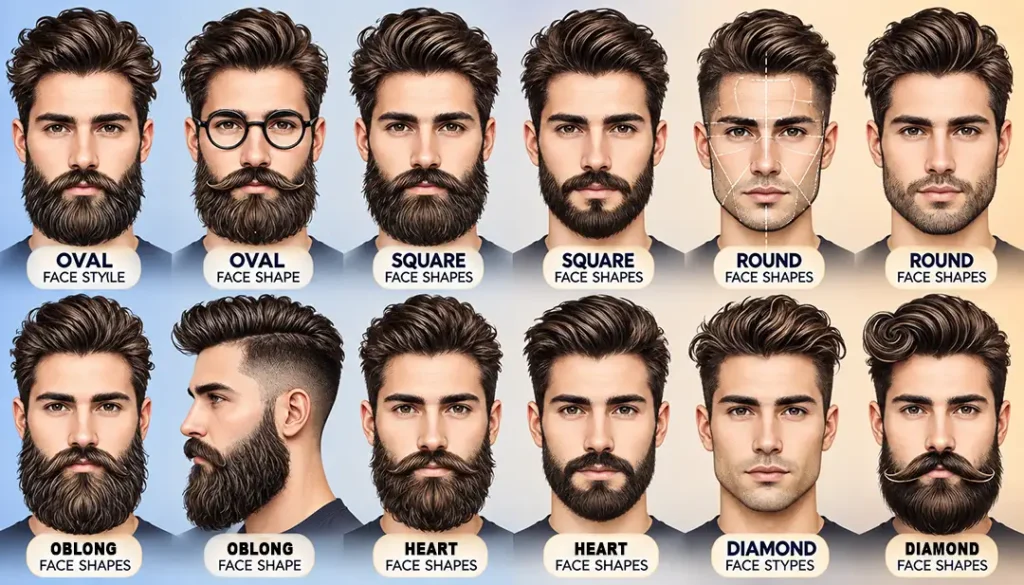
1. Oval Face
An oval face has balanced proportions and a gently rounded jaw.
Recommended styles:
- Modern Italian beard fade.
- Short boxed beard.
- Classic connected beard.
- Medium-length beard.
Styling tip: Keep the beard balanced around the jaw. Avoid too much chin length if you want to maintain your natural proportions.
2. Round Face
A round face has fuller cheeks and a softer jawline. A little extra chin length can help add definition.
Recommended styles:
- Extended goatee.
- Modern Italian beard fade.
- Short boxed beard.
Styling tip: Keep the sides short and add some fullness around the chin. Avoid a beard that looks too wide.
3. Square Face
A square face has a broad forehead and a strong, wide jaw.
Recommended styles:
- Short Italian full beard.
- Modern beard fade.
- Medium-length sculpted beard.
Styling tip: Slightly softer beard edges can balance strong jawlines. Avoid sharp, square outlines unless you prefer that look.
4. Oblong or Long Face
An oblong face is longer than it is wide, often with a longer chin.
Recommended styles:
- Short boxed beard.
- Fuller Italian-inspired beard.
- Classic short beard.
Styling tip: Keep the chin short and maintain some fullness along the sides. Avoid long, pointed goatees.
5. Heart-Shaped Face
A heart-shaped face usually has a wider forehead and narrower chin.
Recommended styles:
- Fuller chin beard.
- Medium-length Italian beard.
- Extended goatee.
Styling tip: Add some fullness around the chin and lower jaw. Keep the sideburns balanced.
6. Diamond Face
A diamond face has prominent cheekbones, a narrower forehead, and a pointed chin.
Recommended styles:
- Short boxed beard.
- Modern Italian fade.
- Medium beard with a shaped chin.
Styling tip: Keep the cheek lines natural and avoid removing too much hair around the jaw. A fuller chin can help balance the face.
Italian Beard Styles by Face Shape
| Face shape | Recommended styles | Main goal |
|---|---|---|
| Oval | Fade, short boxed, classic | Maintain balance |
| Round | Extended goatee, fade | Add definition |
| Square | Short full beard, fade | Soften the jaw |
| Oblong | Short boxed, fuller sides | Limit chin length |
| Heart | Fuller chin, extended goatee | Add lower-face fullness |
| Diamond | Short boxed, medium beard | Balance cheeks and chin |
These are starting points, not strict rules. Your natural beard growth may matter just as much as your face shape.
Start with a manageable length, follow your natural beard lines, and make small changes until you find a look you like.
How to Get the Italian Beard Style at Home
You don’t need a barbershop to get an Italian beard style. A good trimmer, a few useful attachments, and some patience can help you create the look at home.
Work slowly. Choose your beard style first, check your natural growth, and avoid cutting too much hair at once.
Step 1. Grow Your Beard and Check Its Growth
Let your beard grow for a few weeks so you can see where the hair is thick or patchy. Check your cheeks, moustache, chin, and jawline.
If your cheeks are thin but your chin and moustache grow well, a classic goatee or pizzetto may be easier to maintain. Fuller cheek growth gives you more options, such as a short boxed beard or modern fade.
Step 2. Choose Your Beard Shape
Pick a style that suits your face and natural beard growth. A reference photo showing the front and sides can help you get the right shape.
Consider the beard length, moustache connection, cheek lines, and sideburn fade. A short boxed beard or simple fade is a good starting point for beginners.
Step 3. Prepare Your Beard and Tools
Wash your beard with a gentle cleanser and dry it before trimming, unless your trimmer supports wet use. Comb through the hair to remove tangles.
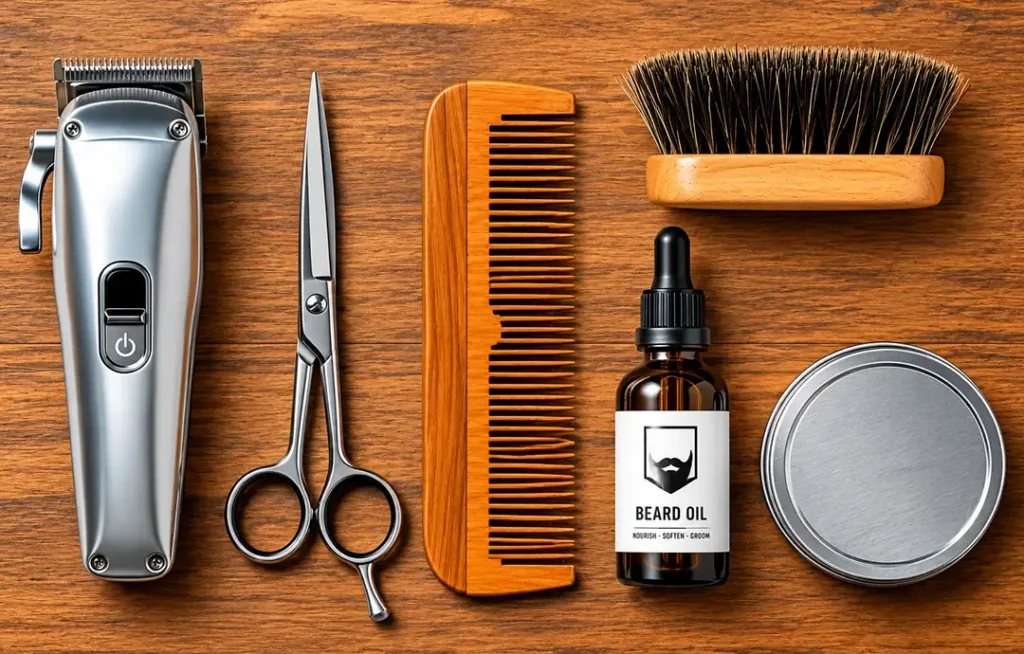
You’ll need:
- An adjustable beard trimmer with guide guards.
- A precision trimmer for detailed work.
- A beard comb and shaping guide.
- A white cosmetic pencil for marking lines.
- A razor or precision shaver for cleanup.
- A beard brush and suitable beard oil.
Clean and charge your trimmer before use.
Step 4. Mark Your Cheek Lines and Neckline
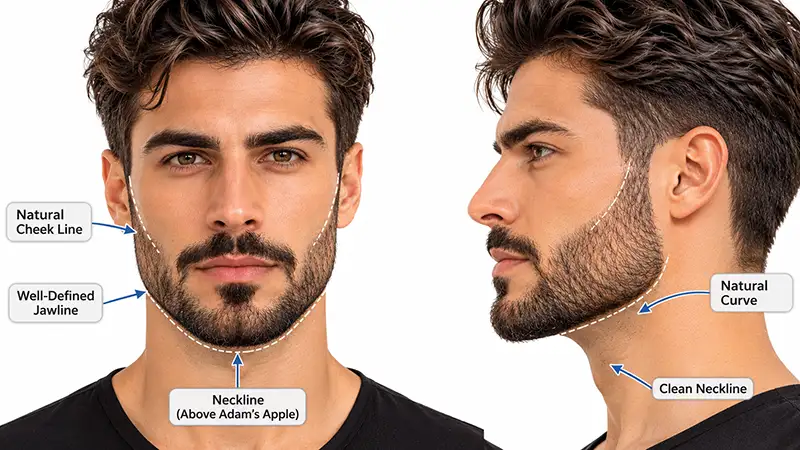
Stand in front of a well-lit mirror and mark your cheek lines with a cosmetic pencil. Keep them natural rather than cutting them too low.
For the neckline, use a point just above your Adam’s apple as a starting guide. Follow a gentle curve under your jaw. Check both sides before trimming.
Step 5. Trim the Beard and Sideburns
Start with a longer guard, around 5–7 mm for a short-to-medium beard. Move slowly across the cheeks, jaw, and chin. Check the result before switching to a shorter setting.
For a fuller chin, leave slightly more length there than on the cheeks.
To create a fade, gradually shorten the sideburns as you move upward. For example, you could start with 5–7 mm around the jaw, 3–5 mm on the upper cheeks, and 1–2 mm near the upper sideburns.
These are starting points, not fixed settings. Use light strokes and check the blend as you go.
Step 6. Shape the Cheeks, Jaw, and Moustache
Use a precision trimmer to remove stray hairs outside your cheek lines and jaw outline. Keep the edges clean but natural.
Comb your moustache downward and trim any hair covering your upper lip. Keep both sides even. For a connected beard, avoid cutting the hair between the moustache and chin. For a Balbo, keep the intended separation clean.
Step 7. Clean the Neckline and Finish
Remove hair below your marked neckline with a suitable trimmer or razor. If using a manual razor, apply shaving gel and use light strokes. Avoid repeatedly shaving the same area.
Brush or comb your beard and check it from the front and both sides. Make small corrections where needed. A few drops of beard oil can help soften the hair and reduce dryness.
Clean your tools after use. Your first trim doesn’t need to be perfect. Make small changes as your beard grows.
Best Grooming Tools to Create an Italian Beard
You don’t need an expensive barber kit. A reliable adjustable trimmer and a few useful attachments are usually enough.
1. Adjustable Beard Trimmer
This is your main tool for controlling beard length and shaping the cheeks, jaw, chin, and sideburns.
Look for adjustable length settings, secure guards, sharp blades, and a comfortable grip.
One model worth comparing is the Philips Norelco All-in-One Trimmer Series 7000 MG7910/49.
Its listed features include:
- 19 tools and accessories.
- 19 length settings from 0.5 to 16 mm.
- Fine adjustments of up to 0.2 mm.
- Self-sharpening steel blades.
- Smart BeardSense technology.
- Precision trimming and shaving attachments.
These features can help with different beard lengths and detailed shaping.
Availability note: Philips website lists the MG7910/49 as discontinued on its US support page. Check current availability and warranty coverage before buying.
Check: Best Beard & Body Hair Trimmer for Men
2. Precision Beard Detailer
A narrow trimming head helps clean up cheek lines, moustache corners, and the chin. Some all-in-one kits already include one.
3. Beard Comb and Shaping Pencil
A comb helps manage facial hair, while a white cosmetic pencil lets you mark the outline before trimming. Both are useful for fades and boxed beards.
4. Precision Shaver or Razor
Use a precision shaver or razor to remove stray hairs outside your beard lines, especially around the cheeks and neckline. Choose one that suits your skin and avoid repeated passes over irritated areas.
5. Beard Brush and Oil
A brush helps arrange the hair and distribute natural oils. Beard oil can soften coarse hair and help with dryness. Choose one that suits your skin.
What to Look for in an Italian Beard Trimmer
| Feature | Why it matters |
|---|---|
| Adjustable length settings | Controls beard length |
| Fine adjustments | Helps create smooth transitions |
| Precision attachment | Shapes edges and moustache |
| Fading guards | Helps blend sideburns |
| Self-sharpening blades | Reduces frequent blade changes |
| Comfortable grip | Improves trimming control |
| Washable design | Makes cleaning easier |
| Good battery life | Reduces charging frequency |
For most men, a reliable trimmer with adjustable guards and a precision attachment is enough to get started. You can add other tools as your grooming skills improve.
How to Ask Your Barber for a Modern Italian Beard
Getting an Italian beard at a barbershop is easier when you show your barber exactly what you want. The term can mean different things, from a classic goatee to a modern faded beard.
Bring a reference photo and explain your preferred shape.
What to tell your barber:
“I want a modern Italian beard with tapered sideburns, a smooth fade, and slightly fuller hair around the jaw and chin. Keep the cheek lines clean but natural, shape the moustache neatly, and give me a balanced neckline.”
Also discuss the fade, cheek lines, chin length, moustache connection, and neckline. For a pizzetto or Balbo, show a reference photo to avoid confusion.
How to Maintain an Italian Beard Style
A neat Italian beard needs regular care. As the hair grows, the fade, cheek lines, and moustache can lose their shape.
How Often Should You Trim?
Your grooming schedule depends on how fast your beard grows.
| Grooming task | Suggested frequency |
|---|---|
| Clean cheek lines | Every 3–5 days |
| Maintain sideburn fade | Every 1–2 weeks |
| Trim moustache | Every 1–2 weeks |
| Trim overall beard | Every 1–2 weeks |
| Clean neckline | Every few days, as needed |
| Clean grooming tools | Follow maker’s instructions |
These are general guidelines. Short fades may need more frequent care.
Keep Your Beard Clean
Wash your beard with a gentle beard wash to remove dirt and excess oil. Pat it dry with a towel, then apply a little beard oil if needed.
Use a comb or brush to keep the hair neat and easy to manage. Avoid using too much oil, as it can make your beard greasy.
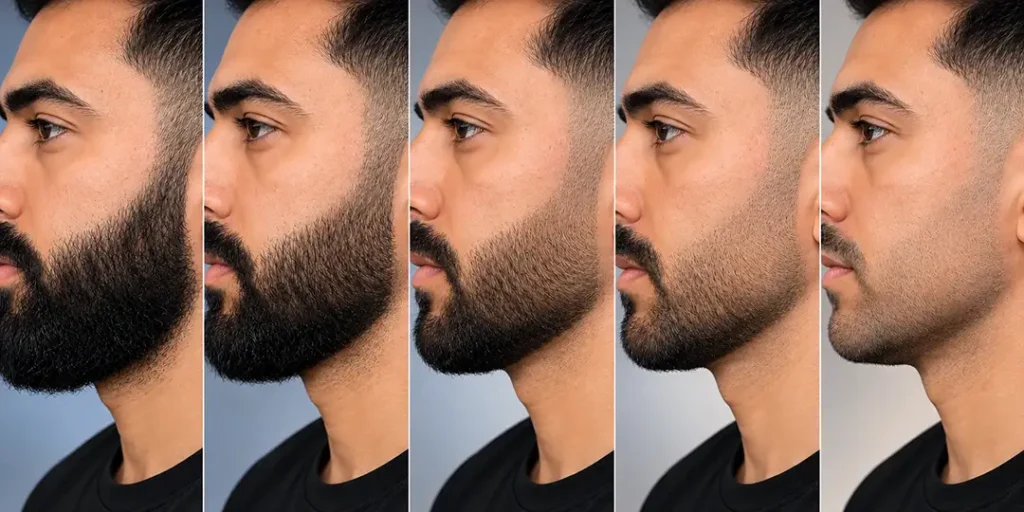
Maintain the Fade and Sideburns
Use adjustable trimmer guards to maintain the existing fade. Avoid changing the shape each time you trim. Check both sides in the mirror to keep them even.
Visit a barber for a touch-up if you’re unsure about blending the sideburns.
Common Italian Beard Grooming Mistakes to Avoid
- Cheek lines too high: Follow your natural beard growth instead of removing too much hair.
- Cutting too much at once: Start with a longer guard and shorten it gradually.
- Uneven fade: Use consistent guard settings and compare both sides.
- Moustache too short: Trim only the hair that covers your upper lip.
- Neckline too high: Keep a natural curve below the jaw.
- Wrong beard style: Choose a design that works with your natural beard growth.
A thick beard isn’t always necessary. The right shape and proper care matter more.
FAQs About Italian Beard Style
1. What Is the Most Popular Italian Beard Style?
The modern Italian beard fade is a popular choice. It features tapered sideburns, fuller hair around the jaw, clean cheek lines, and a neat moustache. A classic connected goatee is another option.
2. Is an Italian Beard Suitable for an Oval Face?
Yes. Oval faces work well with many beard styles. A modern fade, short boxed beard, or classic connected beard can all be good choices.
3. How Long Does It Take to Grow an Italian Beard?
It depends on your beard growth and chosen style. Designer stubble may take only a few days, while a fuller beard or extended goatee may need several weeks.
4. What Is the Difference Between an Italian Beard and a Goatee?
A goatee mainly covers the chin, sometimes with a connected moustache. Italian-inspired styles cover more options, including goatees, short boxed beards, and faded full beards.
5. Can You Get an Italian Beard with Patchy Facial Hair?
Yes. A pizzetto, extended goatee, or designer stubble can work well with uneven cheek growth. Choose a style that suits the areas where your beard grows best.
6. What Length Is Best for a Modern Italian Beard?
There is no fixed length. A short modern fade may use around 3–8 mm of beard hair, with shorter sideburns and fuller growth near the jaw and chin. Adjust the length to suit your face and beard density.
7. Does an Italian Beard Require Regular Trimming?
Yes. Regular trimming helps maintain the fade, cheek lines, moustache, and neckline. Short fades often need more frequent touch-ups.
8. Can I Create an Italian Beard at Home?
Yes. An adjustable beard trimmer and precision attachment are usually enough. Trim slowly, shape the cheek lines and neckline, and blend the sideburns.
For your first fade, consider visiting a barber. You can maintain the shape at home afterward.
Final Virdict
Italian beard styles are all about clean edges, balanced length, and a well-shaped moustache. Whether you prefer a classic pizzetto, short boxed beard, or modern fade, choose a style that suits your face and natural beard growth.
Use a good trimmer and keep the cheek lines, moustache, and neckline neat. You don’t need a thick beard or a complex fade to get the look. A beard that suits your face and is well maintained makes the biggest difference.
Leave a Reply